"...at the decisive points they cannot fail to hear something of the rolling thunder of the 1921 Romans..."
So says Barth in the preface to CD IV/2. The "they" he is referring to are the Pietists concerned with the doctrine of sanctification (and the apparent lack of one in Barth's theology). IV/2 is Barth's answer to this group, though it is an answer which may not satisfy them. Why not? Because the "thunder" of Romans II which so disturbed many of its readers can also be heard here in the "mature" Barth.
I mention this only because there's a great quote from Deadwood (delivered without suitable gravitas by the inimitable Keith Carradine) which captures what I'm trying to do with my thesis on Barth's concept of love: "listen to the thunder."
Wednesday, June 21, 2017

Thursday, May 25, 2017
The Turn to the Trinity
There's is an excellent series of tweets on Ben Myers's twitter page concerning the doctrine of the Trinity. I thoroughly recommend it. A while back I started writing my own set of theses on the doctrine of Trinity, more as a rant than anything else. I quickly gave up, in part because that's how anything I begin to write usually ends, and in part because it was becoming clear that I'd be aligning myself with some form of heresy.
So, for example, thesis 1 was: "The doctrine of the Trinity is simply a way elaborating on the claim that Jesus is Lord," and, following on from this, thesis 2 was "The doctrine of the Trinity serves Christology, and not the other way around."
In a parallel universe, when historians of theology write the intellectual biography of the second best theologian to come out of Mervue, Galway in the early twenty-first century, they will call this my hyper-Barthian phase.
Anyway, the point is, the doctrine of the Trinity vexes me. It always has. And if Barth is responsible for the modern "turn to the Trinity," then I think it's one of his more regrettable gifts to the church. For it has given rise to all sorts of meaningless talk of perichoretic relationality, participation in the divine dance (or just participation full stop), divine mystery, and so on. Here my instincts are firmly with the early Melanchthon, who thought that such talk was for the worst form of scholasticism. Protestants, he argued, were interested in more concrete matters like law, sin, and grace - in short, the benefits of Christ given to an undeserving world. Melanchthon, it should be noted, later corrected himself, beginning subsequent editions of his theology handbook with a doctrine of God.
One of the fault lines in theology today is, essentially, whether to follow the early or the later Melanchthon. Barth, in typical fashion, disagreed with both the early and the later Melanchthon, though I'm sure he was entirely successful. Barth began (it seems to me) by trying to have the doctrine of the Trinity and Christology as equally basic. These, he claimed, where the distinctives of Christian theology. For my own part, I'm yet to be convinced that a doctrine of the Trinity per se is a Christian distinctive. What I mean is, I can imagine a Triune God who is quite other than the God revealed in Jesus. This is what the first two of my ill-advised theses were getting at. That is not to say that God is not Triune. But it is to say that God's Triunity, in abstraction from the concrete person of Christ, is an idol, perhaps even the worst of all idols.
Now you can see why I abandoned those theses.
So, for example, thesis 1 was: "The doctrine of the Trinity is simply a way elaborating on the claim that Jesus is Lord," and, following on from this, thesis 2 was "The doctrine of the Trinity serves Christology, and not the other way around."
In a parallel universe, when historians of theology write the intellectual biography of the second best theologian to come out of Mervue, Galway in the early twenty-first century, they will call this my hyper-Barthian phase.
Anyway, the point is, the doctrine of the Trinity vexes me. It always has. And if Barth is responsible for the modern "turn to the Trinity," then I think it's one of his more regrettable gifts to the church. For it has given rise to all sorts of meaningless talk of perichoretic relationality, participation in the divine dance (or just participation full stop), divine mystery, and so on. Here my instincts are firmly with the early Melanchthon, who thought that such talk was for the worst form of scholasticism. Protestants, he argued, were interested in more concrete matters like law, sin, and grace - in short, the benefits of Christ given to an undeserving world. Melanchthon, it should be noted, later corrected himself, beginning subsequent editions of his theology handbook with a doctrine of God.
One of the fault lines in theology today is, essentially, whether to follow the early or the later Melanchthon. Barth, in typical fashion, disagreed with both the early and the later Melanchthon, though I'm sure he was entirely successful. Barth began (it seems to me) by trying to have the doctrine of the Trinity and Christology as equally basic. These, he claimed, where the distinctives of Christian theology. For my own part, I'm yet to be convinced that a doctrine of the Trinity per se is a Christian distinctive. What I mean is, I can imagine a Triune God who is quite other than the God revealed in Jesus. This is what the first two of my ill-advised theses were getting at. That is not to say that God is not Triune. But it is to say that God's Triunity, in abstraction from the concrete person of Christ, is an idol, perhaps even the worst of all idols.
Now you can see why I abandoned those theses.
Monday, April 10, 2017
Football, Bloody Hell
I've decided, with no small amount of fear and trembling, to stop watching football. I'll see this season out, but once the Champions League final ends, once Eamon Dunphy has prophesied the impending demise of the beautiful game on account of there being no more street football, once the football websites are filled with talk of £150m war chests, and talk of the good-player-but-not-a-great-player Dele Alli moving to Manchester United for a world record fee of three billion pounds, I will make my quiet exit from the stadium. Footage may emerge of me in my car, head buried in my hands, wondering what's just happened. But the die has been cast. There will be no going back.
Except there will be going back. I'm sure I'll watch games with friends (Alva counts as a friend, right?). Furthermore, I intend this as a sabbatical of sorts. A break away from the game to clear my head, perhaps learn a foreign language or two to expand my options for the years ahead. I will continue to play football. But the hours I spend watching it, reading about it, hearing about it, thinking about it (both in its "real" and "fantasy" form, though it's getting harder to tell the difference) will be reduced to virtually zero. And we really are talking hours and hours here. More than I'd care to tot up and admit.
Why the drastic measure?
You could understand it pietistically, as my attempt to wean my soul from those things that distract me from God and neighbour.
You could understand it politically, as my attempt to embody Terry Eagleton's insistence that the first thing a socialist government would have to do would be to get rid of sport (whether he means the consumption of it or the playing of it I'm not sure.)
You could understand it iconoclastically, as my attempt to topple an idol not only in my own life, but an idol that has transfixed the world, turned human beings into gods worthy of worship - an idol which itself has sold out to the gods of money and glory and war (in a post-apocalyptic world, footballers and other pristine athletes will rule the world).
You could understand it pragmatically, as my attempt to sharpen my focus on the PhD as I approach its final year.
You could understand it psychologically, as my attempt to avoid seeing my beloved Andres Iniesta rage against the dying of the light.
But if you really want to understand it, simply watch this David Mitchell sketch. It gets me every time.
There was a time when, relatively speaking, I didn't watch much football (it is surely no coincidence that I supported Aston Villa during that time). I watched the Champions League, and got excited by these cultured Europeans with their novel ideas of passing and moving. I watched the major international tournaments, and got excited by whoever was deemed the "next Maradona" or the "next Pele" or the "next Kilbane". That was the age before digital streaming and digital media. There's no going back to that age. Football will plough on, seemingly impervious to the economic conditions of the time - or perhaps their most faithful and horrifying representative. I will no doubt resume my journey with it into the depths of hell. A sneaky El Clasico here, a covert catch-up on Second Captains or Football Weekly there. I may even fall in love with it all over again, as it dangles in front of me a New Ronaldo (the 'real' one, as Mourinho once called him - purely out of spite for the current one, of course), a New Valeron, a New Riquelme, a New Iniesta as its death-rattle. How could I resist? In about two months time, I will try to do just that, so help me God.
Until then, however, I will be soaking up every meaningless kick of a football, and doing my damndest to ensure that my 10 year old nephew doesn't beat me in Fantasy Premier League. Fantasy Football Scoutcast here I come. You were the canary in the coalmine, but let's just stay a little while longer and go out with a bang.
Sunday, February 12, 2017
A Knowledge of God Independent of Jesus Christ? Nein!

Consider the following passages from two theologians at almost opposite ends of the spectrum.
First, J. Gresham Machen, from his book Christianity and Liberalism:
"How, then, shall God be known; how shall we become so acquainted with Him that personal fellowship may become possible? Some liberal preachers would say that we become acquainted with God only through Jesus. That assertion has an appearance of loyalty to our Lord, but in reality it is highly derogatory to Him. For Jesus Himself plainly recognized the validity of other ways of knowing God, and to reject those other ways is to reject the things that lay at the very center of Jesus’ life. Jesus plainly found God’s hand in nature; the lilies of the field revealed to Him the weaving of God. He found God also in the moral law; the law written in the hearts of men was God’s law, which revealed His righteousness. Finally Jesus plainly found God revealed in the Scriptures. How profound was our Lord’s use of the words of prophets and psalmists! To say that such revelation of God was invalid, or is useless to us today, is to do despite to things that lay closest to Jesus’ mind and heart.
But, as a matter of fact, when men say that we know God only as He is revealed in Jesus, they are denying all real knowledge of God whatever. For unless there be some idea of God independent of Jesus, the ascription of deity to Jesus has no meaning. To say, “Jesus is God,” is meaningless unless the word “God” has an antecedent meaning attached to it. And the attaching of a meaning to the word “God” is accomplished by the means which have just been mentioned. We are not forgetting the words of Jesus in the Gospel of John, “He that hath seen me hath seen the Father.” But these words do not mean that if a man had never known what the word “God” means, he could come to attach an idea to that word merely by his knowledge of Jesus’ character. On the contrary, the disciples to whom Jesus was speaking had already a very definite conception of God; a knowledge of the one supreme Person was presupposed in all that Jesus said. But the disciples desired not only a knowledge of God but also intimate, personal contact. And that came through their discipleship with Jesus. Jesus revealed, in a wonderfully intimate way, the character of God, but such revelation obtained its true significance only on the basis both of the Old Testament heritage and of Jesus’ own teaching. Rational theism, the knowledge of one Supreme Person, Maker and active Ruler of the world, is at the very root of Christianity."
Second, Katherine Sonderegger, from her Systematic Theology
"Once again we must quietly but firmly state the Christology cannot be the sole measure, ground, and matter of the doctrine of God; there is more, infinitely more to the One, Eternal God."
Now, contrast both of these claims with the claim of Karl Barth in volume IV of Church Dogmatics:
"That God as God is able and willing and ready to condescend, to humble Himself in this way is the mystery of the "deity of Christ" - although frequently it is not recognised in this concreteness. This deity is not the deity of a divine being furnished with all kinds of supreme attributes. The understanding of this decisive christological statement has been made unnecessarily difficult (or easy), and the statement itself ineffective, by overlooking its concrete definition, by omitting to fill out the New Testament concept "deity" in definite connexion with the Old Testament, i.e., in relation to Jesus Christ Himself. The meaning of His deity - the only true deity in the New Testament sense - cannot be gathered from any notion of supreme, absolute, non-worldly being. It can be learned only from what took place in Christ. Otherwise its mystery would be an arbitrary mystery of our own imagining, a false mystery. It would not be the mystery given by the Word and revelation of God in its biblical attestation, the mystery which is alone relevant in Church dogmatics. Who the one true God is, and what He is, i.e., what is His being as God, and therefore His deity, His "divine nature," which is also the divine nature of Jesus Christ if He is very God - all this we have to discover from the fact that as such He is very man and a partaker of human nature, from His becoming man, from His incarnation and from what He has done and suffered in the flesh. For - to put it more pointedly, the mirror in which it can be known (and is known) that He is God, and of the divine nature, is His becoming flesh and His existence in the flesh."
A dissertation's worth of stuff could be said on the relationship between these three passages. And a litany of proof-texts could be given in reply to Machen and Sonderegger. For example,
"No one knows the Son except the Father, and no one knows the Father except the Son and those to whom the Son chooses to reveal him."
Or,
"For in Christ all the fullness of the Deity dwells in bodily form..."
One could also make some interesting historical observations in relation to these passages. For instance, to the extent that liberal theology was an attempt to recover the significance of the concrete person of Jesus for Christian theology and life, then Barth can indeed be seen as a child, even an heir, of liberalism. Whatever else it may have been, Barth's break with liberalism in the first decade of the 20th century was not a return to orthodoxy. The standard American description of Barth as "neo-orthodox" is for this reason a complete misnomer. Barth had no interest in reviving orthodoxy as such. Barth's radical Christocentrim - and it is easy to forget how radical it is when you study at the University of Aberdeen (described by one theologian as the home of "radical-apocalyptic Barthianism") - blocked the way for any simple return to orthodoxy as expressed in the mode of classical theism. For Barth, there can be no grounding of Christianity in "rational theism," even one which is based on Scripture. And there is no getting behind Christ to a God who is more rich than the one revealed in Jesus of Nazareth. One can of course contest Barth on these points - though the contest will be most fruitful simply in the doing of one's work, and not in methodological squabbles. And even if one agrees with Barth on the way in which theology must proceed, one can and should contest the conclusions which he draws. If being a Barthian (my supervisor hates this word, as did Barth, who famously said "If there are Barthians, I am not one of them") means anything, it means doing theology the way Barth sought to do theology; it should never mean repristination. Barth claims that "back to" is never a good slogan in theology. This is equally true of any calls to go "back to Barth."
Saturday, January 14, 2017
Film Awards 2016: Part V
Best Attempt to Destroy a TV Show
 David Brent: Life on the Road, is a terrible, terrible comedy. If that scientific fact hurts Gervais's feelings, then it's for him to get better feelings, not for me to get better facts. He has quite simply pissed on everything that made The Office great, managing to achieve nothing of its pathos, its humanity, not to mention its humour. I shouldn't be surprised. In an ironic twist, Gervais's career has gone the way of Andy from Extras once he made it big, and the comedies he's made barely rise above the level of When the Whistle Blows. The two seasons of The Office remain the most perfect seasons of any television comedy. I watch them religiously, and throw in quotes from them as part of my own comedy (see what I did there?). But if there is a God - and it's difficult to tell from Gervais's Twitter account whether he thinks there is - I will never watch Life on the Road again.
Best Dialogue
 Hell or High Water is the film critics were contractually obliged to call this "elegiac." The story is a slight twist on the bank-robbing genre, with the banks themselves (and not the law enforcement) being the real enemy to the robbers. The strength of this film is not its story, however, but its script. Catherine Shoard wrote a good piece on the decline of dialogue in contemporary cinema. Hell or High Water does all it can to buck that trend. "Who the hell gets drunk on beer?" says Ben Foster in response to little brother Chris Pine's request that he not get drunk so early in the morning. This is just one example of the many innocuous but revealing interactions between the characters. Of course one cannot praise the dialogue without also praising the actors. The four leads are excellent. We know what Jeff Bridges can do (and he does it superbly here in tandem with Gil Birmingham), and Ben Foster may well be the most underrated actor of our generation, but it's Chris Pine who really stands out. I didn't think he had it in him, but this is a wonderful addition to his patchy CV. All told, Hell or High Water is a lament of sorts: a lament for a time when the South was different, and a lament for a time when films spoke.
 Best War Film
There's nothing particularly special about Anthropoid. It's not bad, and it's not brilliant. It tells the story of a Czech resistance movement to Nazi occupation, and the plot to assassinate Reinhard Heydrich, one of the main architects of the Final Solution. Watch it or don't. but I got some place to be.
Best Film
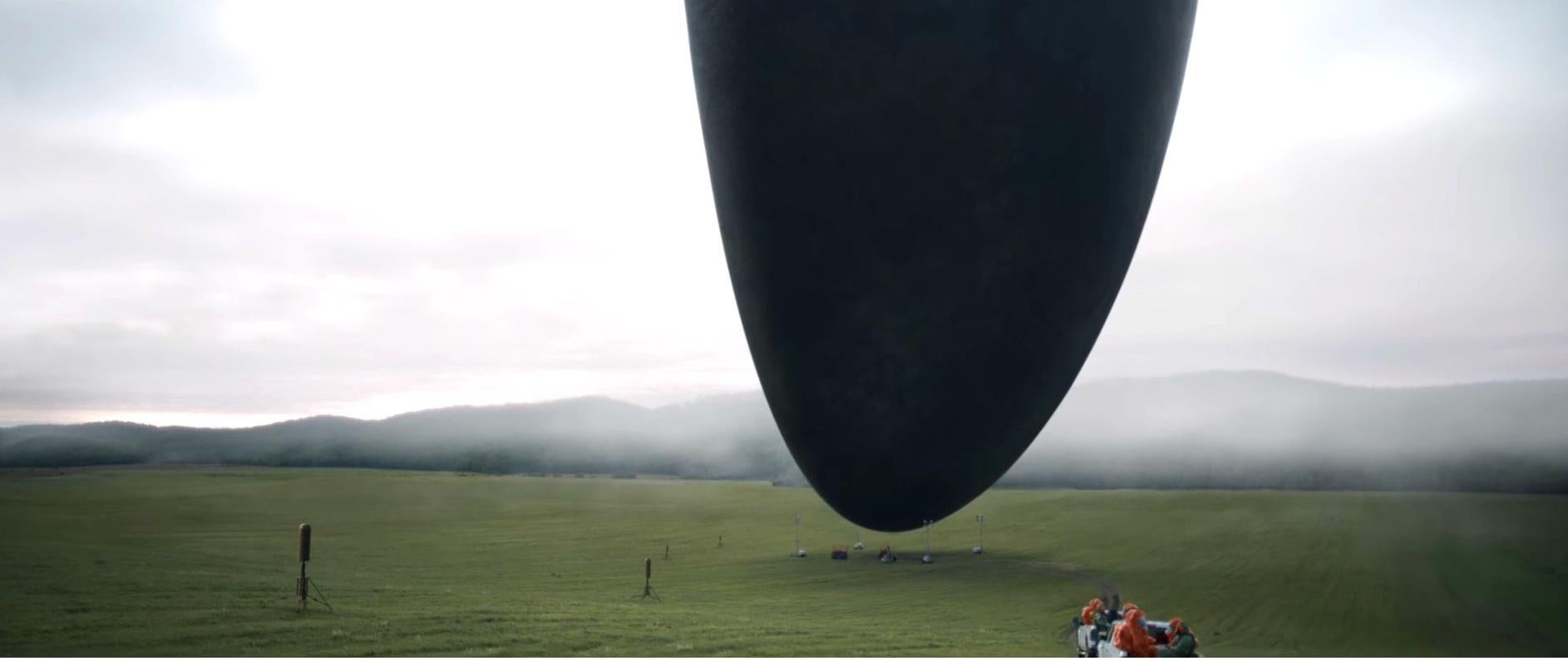 Arrival is as moving a moving picture as I've seen in quite a while. Comparisons with Malick, in particular The Tree of Life, are not out of place. If Tree of Life is an Augustinian prayer, then Arrival is an Augustinian treatise on language and time. The film is simple - almost cliched - in its construction (alien invasion, flash-backs, agitated military men), but it plays with these in mostly interesting ways, leading to a final twist which somehow you realise you knew all along. It is not perfect. For a film about language, it suffers from a lack of truly memorable lines. Even the verbally challenged Tree of Life managed to imprint some of its language as well as it images on me ("Father...Mother...always you wrestle inside me" and so on). But Arrival is the perfect antidote to the London Has Fallen's and Eye in the Skye's of this world. It is not the film we deserve, but it's the film we need.
Friday, January 6, 2017
Film Awards 2016: Part IV
Best Film Based on a Computer Game
 The optimistically named Warcraft: The Beginning is a right ol' mess of a movie. Yet sometimes messes can be fun. This wasn't one of those times. For people who have never played the computer game there is too much that needs explaining, too many characters and magic powers to keep track of. I felt lost, and nobody should feel lost in a film as dumb as this. Warcraft: The Beginning did go on to make nearly half a billion dollars, so we may well be getting a Warcraft: The Middle in the near future. Needless to say,
 Best Use of the Michael Scott Principle of Improv
 If The Big Short is the sharp-witted version of the financial crash, then Money Monster is the farce. It seemed like everyone had a good time making this film, and it's hard not to have a good time watching it. As for tension, the movie follows the Michael Scott principle: if you want to make a scene interesting, give someone a gun. Or, in this case, a bomb. That said, the film doesn't really work as a thriller, but it certainly has enough going for it to make it eminently watchable, if not exactly memorable.
Most Unnecessary Sequel
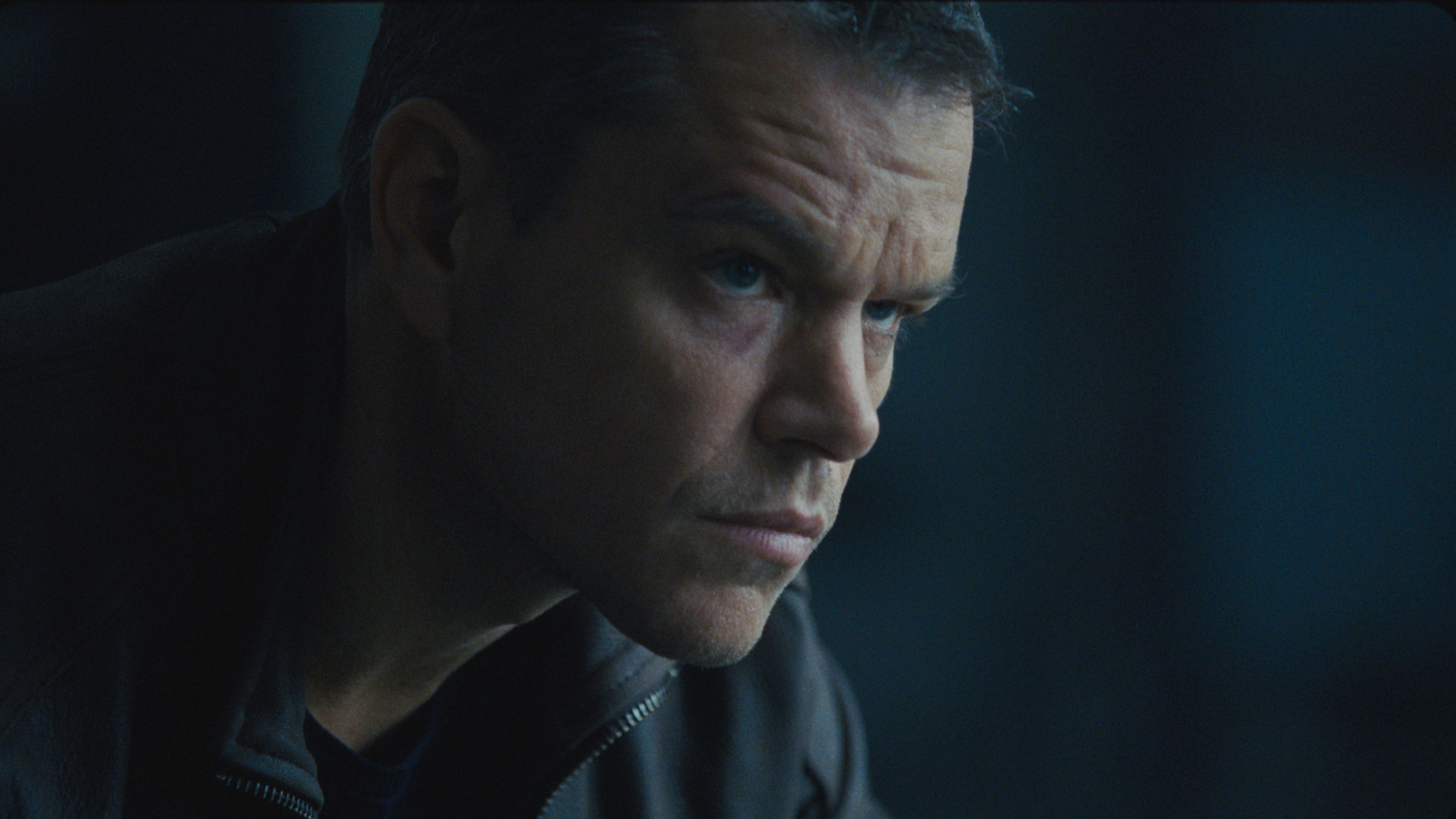 There were three strong contenders for this gong. Independence Day: Resurgence and Now You See Me 2 did all they could to demonstrate their superfluity. The former has all of the nonsense of the original but none of its silly charm, whereas the latter continues to suffer from the fact that magic can only be effectively communicated in a live experience and not by way of a medium. But the king of this year's unnecessary sequels is Jason Bourne. The Bourne Ultimatum was practically perfect in almost every way. Indeed, the Bourne trilogy has a strong case for being the best trilogy in the history of cinema. A fourth installment was wholly unnecessary, but unfortunately we got what we wanted and not what we needed. The sequence during the riots in Greece is pretty spectacular, but the rest of the film feels tired and unimaginative, adding nothing to the character or the story. It is by no means a bad film, but it is destined to remain a disputed member of the canon - a strawy film if you will (#Reformation500).
Saturday, December 31, 2016
Film Awards 2016: Part III
King of the Jungle

Most Disappointing Film
 |
| Any chance there's a script up there?" |
The Joseph Fletcher Award for Services to Situation Ethics
 Governments have a lot of difficult decisions to make. For example, do we accept the $13 billion that is legally owed to us, or do we refuse it? Or, in the case of Eye in the Sky, do we murder an innocent child or do we not? Eye in the Sky is as close to a piece of propaganda for liberal democracy that you're likely to get. It shows all sorts of fine people wrestling with what we're supposed to believe is the central moral dilemma. There's an old joke that says Catholics can do what they want as long as they go to confession, and Protestants can do what they want as long as they feel bad about it. If there's any truth to this, then Eye in the Sky is a deeply Protestant film. There's lots of politicians and soldiers who feel bad about doing what seems to be a necessary evil, but the final message of the film is: don't judge us from your comfortable armchair; we sacrificed our lives so that you could have the freedom to sit in this cinema munching on popcorn and Minstrels and watching important movies like Zoolander 2. In other words, only those who have had to decide whether or not to murder a child are in a position to criticise governmental action. London Has Fallen made no secret of its sadism, no attempt to rationalise or justify its brutality. Eye in the Sky is an evil film precisely because of these attempts. And the worst of it is, it's not even telling us the really brutal truth. Now, imagine a country deciding that London Has Fallen and Eye in the Sky are the only two nominees for the Best Picture Oscar.
The country you have imagined is Fuckheadica.
Best Biopic
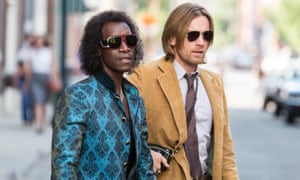
If you want to learn the truth about someone's life, it's probably best to avoid their biopic. The best you can usually hope for in these films are half-truths. And you can be fairly certain that these half-truths will add up to a story of redemption. This was the formula for last year's Steve Jobs and it was the formula for this year's Miles Ahead. I didn't much about Miles Davis before I saw this film, save for the fact that he was a famous jazz musician. Having seen the film I now know that he was a famous jazz musician with a drug problem. This is a strange movie. It follows Davis around in the wilderness years of his career, when he apparently spent his time getting into hilarious jams while chasing his next fix. In the flashbacks we witness a younger Davis in his pomp, playing his trumpet in smokey jazz venues and occasionally beating his wife. It's not an exaggeration to say that these two timelines don't mix very well. Davis is presented to us as a flawed genius who loses his way, though the flaws are severely underplayed (what's a little violence towards women when you can play a mean trumpet?). Don Cheadle is very good in the lead role, but there is something soulless about the whole project.
Best Comedy
Best Film Featuring a Member of the Skarsgård Family

If the son of Stellan Skarsgård cannot save a film then can Stellan Skarsgård himself? This is the pressing question of our age, and the answer is...sort of. Our Kind of Traitor taps into the popularity of British author John le Carré. I've never read a le Carré novel, but if this film is anything to go by then the book on which it is based was probably churned out by le Carré one rainy afternoon while he was waiting for the roast chicken to finish. That is not to say that this is a bad film (or that it must be a bad book). It's just not a very thrilling espionage thriller, and I like my espionage thrillers thrilling.
* Not strictly true
Tuesday, December 20, 2016
Film Awards 2016: Part II
The Best Advertisement for Journalism
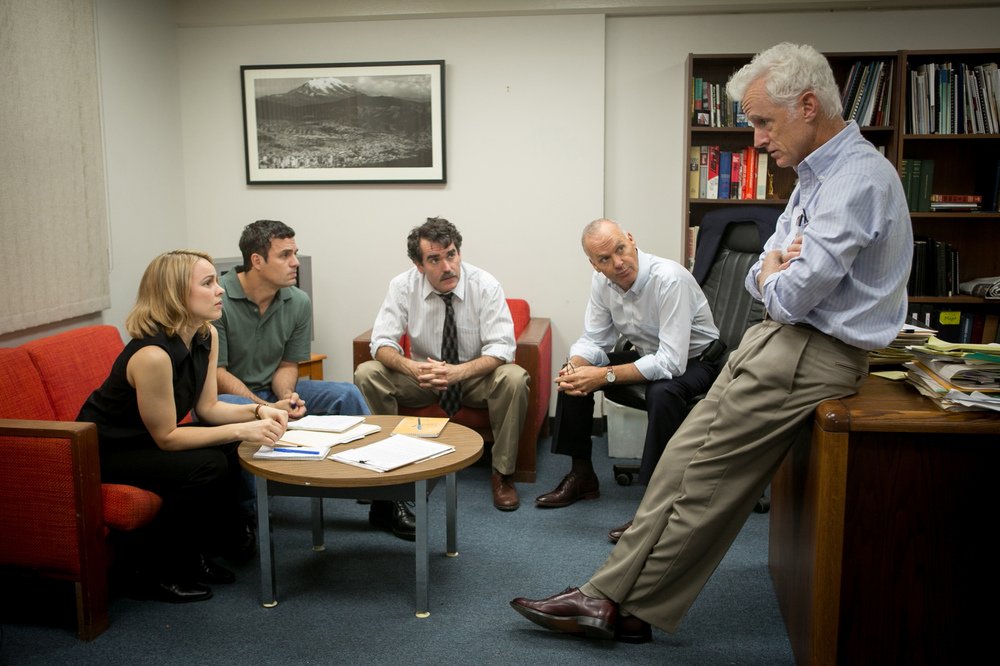 In the fifth season of The Wire (the worst of the five by general consensus, but also the most underrated), David Simon finally tackles head on the institution which is closest to his heart: print journalism. The Wire gives us good journalists and bad ones, with the former suffering because of idiotic decisions made at corporate level and the latter prospering. It's a fairly bleak depiction of the industry, though hardly surprising given Simon's own experiences as a journalist, as well as his singular drive towards what he calls "the audacity of despair." In The Wire, the failure of the journalists (even the good ones) is their remarkable ability to miss the stories that matter. The city of Baltimore is teeming with interesting characters who we have been following for several years. Yet when these characters die, for example, the story of their deaths is buried in some small section of the newspaper. The point Simon is making here - a point which not only applies to journalists, but to police, politicians etc - is that people are ignorant of their own cities. And not only that, but trapped in an ignorance that is self-perpetuating because it is willed. As Detective McNulty says of a former CI, he “saw the street like we wish we could.” In Spotlight, we are given a more hopeful depiction of print media - though not without a final mea culpa. The "street" in this instance is Boston, with the story centering around the sexual abuse suffered at the hands of clergy throughout the city, as well as the institutional cover-up. Indeed, it's perhaps even more the latter than the former. The film shows us good journalists doing good work - interviewing victims, gathering evidence, spotting corrupt practices, facing up to the powers that be. Though a sensational story, the film is not given to sensationalism. It is subdued and matter-of-fact almost to a fault. That said, the "fact" in question is sufficient of itself to evoke heartbreak and fury. How could something not only so horrific, but so widespread, so systematic, so known, have happened? Spotlight's line is that it takes a village (a city) to abuse a child. There is no one with clean hands, though some certainly have dirtier hands than others.
Best Sequel to a Movie That Was Quoted to Death During My Teenage Years
 You know what I like about rich Dublin kids? Nothin’! My first exposure to Zoolander was at a Christian summer camp, where a bunch of my dorm mates [?] quoted it to each other ad nauseam. That’s never a good way to endear one to a film. The same thing happened with Napoleon Dynamite and Anchorman. When I eventually got around to watching these films, there was nothing left to enjoy. We've been spared a Napoleon Dynamite 2 (with Jon Heder's miserable career to thank for that), but we have had no such luck with the others. Anchorman 2 is a singularly humourless comedy, and I'll fight anyone who says otherwise. But Zoolander 2 is not far behind. It got one cheap laugh out of me, but one cheap laugh does not a comedy make (that goes for you as well, David Brent: Life on the Road, but we'll talk later). The if-in-doubt-load-your-comedy-up-with-celebrity-appearances formula just isn't working. Who knew? It's time for Hollywood to take a long hard look at itself and figure out what's funny again. The era of the Frat Pack is over. Time of death: The Internship. They had a good run. The question is, where to next? It's hard to know, but don't be surprised to see Bongwater 2 hitting your local cinema this time next year while Hollywood comes up with a more acceptable answer.
Best Poor Man’s Heat
| "Remind me why agreed to do this movie?" |
Best Neologism
 |
| GB: "Get out of this franchise while you still can, Aaron! I'll cover for ya." AE: "But how are you gonna get out?" GB: "....." |
Best Horror
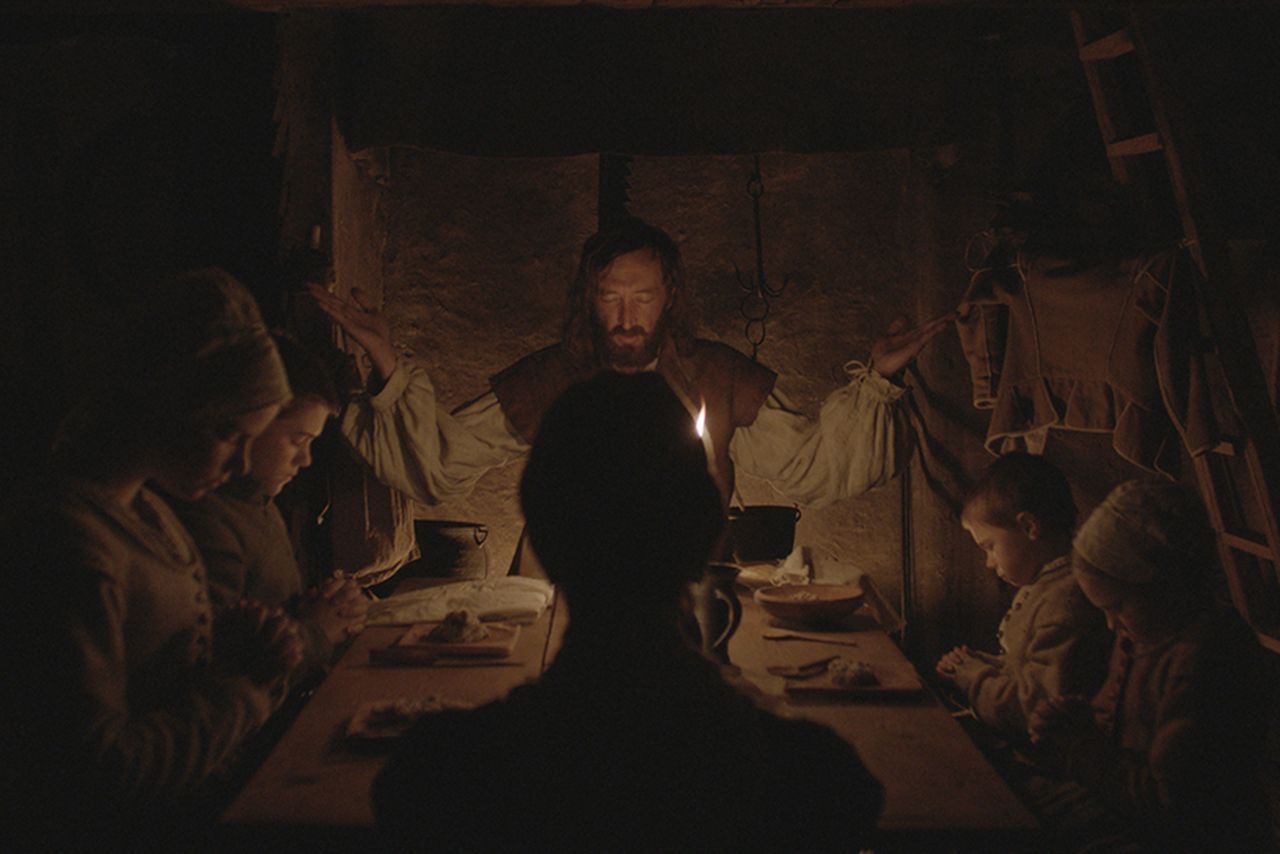
Least Worst Comic Book Film

There's even some mildly interesting political commentary on Superman vs Liberal Democracy, But all of that goes out the window once Jesse Eisenberg's Lex Luthor gets going. Coincidence? I think not. There is an attempt at a kind of pseudo-Nietzschean theme, as well as an attempt at theodicy (can Superman be omnibenevolent and omnipotent?). To put on my theologian's hat for a second, the problem with these attempts is that, contrary to the view of popular atheists (Ireland's friendly racist Ian O'Doherty, for example), God is not thought to be something like an alien (as Terry Eagleton puts it, God plus the universe does not make two). And for Christians, God becomes man, not Übermensch. But all of this is rather beside the point. The real problem with this film is that it's not actually a film at all. It is a two and a half hour advertisement for future films/advertisements. If there are any god-like figures at work here, it's the studio executives intent on creating a cinematic universe, or rather, the Mammon which has them grovelling at its feet and willing to do anything to appease it. 2019's Plastic Man may end up being the film of the decade. But I'll be damned before I go to see it.
 |
| A metaphor: Oscar Isaac is comic book movies, Jennifer Lawrence is the film industry |
Thursday, December 15, 2016
Film Awards 2016: Part I
Let's be clear. 2016 was not a particularly vintage year at the cinema. That being said, I must also confess: I chose poorly. There were potentially great films on offer which for one reason or another I didn't get to see: Hail, Caesar!, American Honey, Son of Saul, Midnight Special, I, Daniel Blake, Nocturnal Animals, Sing Street, Mother's Day. I could blame Cineworld and its reluctance to show anything that isn't guaranteed to earn three billions pounds in its opening weekend. I could also point to the happy fact that my cinema going days all but ended in October (at least for the time being). But truth be told, this one is on me. My rationale is, most of those potentially great movies which I neglected can be watched at home without much loss of appreciation. The cinema, however, is for films that are guaranteed to earn three billion pounds in their opening weekend. And so I trudged along to some unimaginable crap over the last twelve months. You name/ridicule it, I saw it, my only consolation being the fact that, thanks [?] to my Cineworld Unlimited card, it wasn't costing me anything extra to see if Now You See Me 2 or London Has Fallen could live up to the originals (they couldn't, which says a lot).
But it wasn't all bad. I saw a few truly great films this year, films that will live long in the memory, films that I can't wait to see again. And even a bad film at the cinema is still a film at the cinema, and thus an excuse to indulge in my new vice: Galaxy Minstrels (or Counters, though the Minstrels come in bigger bags) mixed with salt & sweet popcorn. So without further delay, here are my awards for the Films of 2016.
Best Film Featuring a Man Sleeping Inside a Horse

Alejandro Iñárritu is so hot right now. The Revenant was the first film I saw in 2016, and none since has matched it for sheer spectacle. From the fairly tight confines of his previous film Birdman, Iñárritu drags his audience out into the vast expanses of the North American wilderness, this time to track Leonardo DiCaprio as he crawls from one misfortune to another. The Revenant covers an enormous amount of space, displaying all the beauty and brutality of Nature. Yet precisely because of this the human story gets sort of swallowed up, or should I say, chewed up and spat out (quite literally). Perhaps that is simply part of the narrative, a sort of critique of Enlightenment anthropocentrism and its attendant colonialism. In the battle between Man and Nature, the lesson of The Revenant is that Nature will not be subdued without cost. What then of the battle between Man and (Tom Hardy’s unnecessarily unintelligible) Man? The Revenant certainly has politico-theological aspirations, aiming to say something about loyalty and violence and revenge, but these remained slightly obscure and unconvincing to me. There are flashbacks and visions that didn’t make a whole lot of sense at the time, though perhaps they would become clear with a second viewing. But watching The Revenant on anything other than a giant cinema screen seems a waste of its talent. This is a made-for-cinema film. In short, I ain’t inclined to watch it anymore. I’ve done it already.
Film with the Best Use of 'The Mighty Rio Grande' by This Will Destroy You

Room isn’t the first film to use 'The Mighty Rio Grande' (it cropped up in 2011’s Moneyball). But it’s definitely the best. I didn’t know what I was walking into when I walked into Room, and after ten minutes I felt like walking out. But this turned out to be a quite brilliant film, weaving philosophical reflection (think Plato’s cave allegory) into a well-told story of human suffering, struggle, and hope. It is as if we are getting a first-hand insight into what it might be like for a child to go from womb (room?) to world: the terror, the disbelief, the wonder. It may or may not be a stretch to call this a pro-life film, but it is undoubtedly life-affirming in the most pregnant sense of that term. That is not to say that Room is an easy watch. It most certainly is not. But this is a carefully crafted and beautifully acted film that deserves to be watched. A definite highlight of 2016. (If you care to see the scene with 'The Mighty Rio Grande' again, here it is.)
Best Film Featuring an Actor with the Same Name as a Basketball Legend

“Where’s Wallace at?” you ask? He’s only starring in one of the most enjoyable movies of 2016, is where he’s at! Michael (B.) Jordan is not yet a household name in the acting world, but it is surely only a matter of time. He oozes charisma and likability, and carries Creed on his considerable torso (it's a long time since that oversized jacket in the low rises). There is enough of an ode to the old Rocky films to keep this attached to the original series, but it doesn’t allow itself to get bogged down by nostalgia or sentiment. This is a film which stands on its own
two feet. It doesn’t exactly break any new ground, but it effortlessly retains boxing’s status as the sport which makes for the best movies. And I hate boxing.
Best Financial Crash Comedy-Drama

It may have missed a trick by not having Kevin Hargaden explaining sub primes while doing calf stretches on an exercise ball, but The Big Short does a fine job of turning the financial crash of 2008 into an intelligent and entertaining film (consider a companion piece to the more solemn Margin Call.) There is too much bravado and machismo on display (Like The Wolf of Wall Street, it seems to assume that its audience is exclusively male, hence Margot Robbie in a hot tub.) But this is a film with good actors giving good performances, and it tells a story so few really understand (in part, at least, because of the technocratic obscurity which surrounds the crash) in a way that helps us to understand it. Do I now know what a sub prime is? I won't pretend that I do. But when I bump into Margot Robbie at the next Society for the Study of Theology conference I will at the very least know to ask her.

Best Actor
Dalton Trumbo is not a communist. He may be a liar, a screenwriter, and a communist, but he is not a porn star. Trumbo may not be the best film of 2016. But given what has happened in the western world since its release, it may well be one of the most significant. It tells a history I knew absolutely nothing about: the blacklisting of Hollywood screenwriters (The Hollywood Ten) who were accused of being communists, and therefore traitors in America's war against Russia - a war which would not be resolved until Rocky IV. Trumbo (who wrote the Oscar winning screenplay to the wonderful Roman Holiday, but couldn't receive credit for it because of the blacklist) is played by Bryan Cranston, perhaps one of the funniest actors in Hollywood at the moment. He gives a sharp and compelling performance, helping to bring an important but neglected moment in American history to life. As a friend recently remarked, there is no real Left in America any more. This film explains at least in part why that might be the case. And as much as Hollywood today likes to think of itself as a strange bastion of something that might be called 'leftist values'...well, watch this video and weep. Workers Film lovers of the world, unite! (by watching this movie over Christmas).
Subscribe to:
Posts (Atom)