Showing posts with label borderline heresy. Show all posts

Tuesday, September 7, 2010

A New Story? # 7 - Free Fallin'

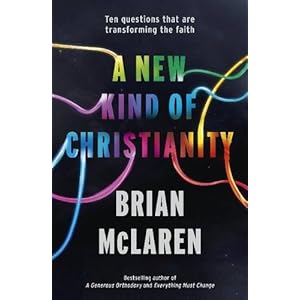
The story of Genesis is a "compassionate coming-of-age" story. So says Brian McLaren in his book A New Kind of Christianity. It is in this context that the section known as "The Fall" fits.

The Greco-Roman way of viewing this section is of mankind undergoing an ontological shift from perfect to sinful. The perfect state is traded in for a messy story. Paradise is lost.

I've had difficulties with this viewpoint for a while. It's like a chicken and egg scenario: Did Adam sin because he was sinful, or did Adam become sinful because he sinned? Can someone who is perfect do something imperfect? Can someone who only knows one language suddenly utter words in another?

This is usually the point when "free will" is mentioned, but I'm not so sure that solves the problem. Consider where the Biblical story ends: New Creation, with human beings created in the likeness of Jesus. For the sake of argument we'll call this "perfection". If the story of "the fall" is a story of perfection descending to imperfection, who is to say that this won't happen again?

Well, I don't think it will happen again. Therefore I think the beginning of the story was something quite different to the end. Adam was "very good", but he couldn't have been "perfect" in the sense of the absolute finished product. That he wilfully disobeyed God leads me to believe that he wasn't much different to you or me. As I said before, the goal is not for us to recover the life of Adam pre-Fall. The goal is new life in Christ.

Where, then, does this leave "The Fall"? Why the move from unashamedly naked to deep shame? Before there is blessing, now there is curse. Before there is garden, now there is wilderness. Adam's disobedience had major ramifications, but the traditional notion of the Fall seems to put more weight on Adam than a man of dust should have to bear.

Here's another way of framing the opening of the story:

Creation, call, disobedience, decay

I'm running ahead of myself here, but there are two good reasons for tracing the narrative as such. I'll call them "Abraham" and "Jesus".

The call of Abraham was God's first step in his re-creation of a world in decay. The obedience (or faithfulness) of Abraham was the required response, and was a counter move to man's (Adam's) disobedience to God's original call to be his representative on earth. Jesus, as the seed of Abraham, also had a call ("Out of Egypt I called my son"). His obedience unto death was the climax of the old creation and the beginning of the new.

Perhaps a simpler way to frame the story is to list every story's central component: Characters.

God, Adam, Abraham, Jesus, Church

What say you? Does the Fall need to be re-thought in light of the story's ending?

Thursday, September 2, 2010

A New Story? # 6 - The Journey So Far

We've been having a conversation with Brian McLaren over the past week. It started with simply opening our eyes and ears to what he has to say. His most recent book, A New Kind of Christianity, generated a lot of heat when it first came out. The general impression I got was that, ironically, the "Brian McLaren is dangerous" camp were happy with it while the "Brian McLaren might be on to something" camp were unhappy. The former thought that with this book McLaren finally came out of the heretic closet, and so they were happy to have some concrete evidence against thier danger man. The latter thought that McLaren may have veered too off course for them to follow his trail, and so reluctantly they pulled up. Of course many are still side by side with McLaren on his spiritual quest, willing to journey with him to the depths of orthodoxy and unorthodoxy in order to emerge with a hidden pearl of great price.

I am none of the above people. I'm new to this environment. A visitor from out of town, seeing some commotion and asking McLaren what it's all about.

The launching pad for McLaren's exploration is his disillusionment with the traditional overarching story of Scripture and discovery of a new narrative. For McLaren, the old story is neither morally believable nor biblical. It is, rather, a story steeped in Greco-Roman thought, which is wholly different to the very Jewish worldview of the Bible - the worldview McLaren seeks to recapture.

He begins this mission by looking at the creation narrative in new light. The result, so far, is more a severely edited version of the old narrative than a brand new one. McLaren's argument is not without deliberate provocation and obvious contradiction (nothing new for the man who is both conservative and liberal, Catholic and Protestant, Calvinist and Armenian), but I find in many of his thoughts a deep resonance with my own when I am most honest.

The conversation has been interesting so far, and will remain so as we discuss what is commonly dubbed "The Fall".

Tuesday, August 31, 2010

A New Story? #5 - Creating With Clay

What's cooler than being cool?

"Ice cold!", answer Outkast.

What's better than perfect?

"Good", answers Brian McLaren, author of several books that irk Al Mohler.

"Jewish goodness...is far better than Greco-Roman perfection" asserts McLaren, who appears to be having a go at the Greco-Romans. One of the problems with the Greco-Roman narrative, as McLaren sees it, is that it leaves no room for other narratives. But has McLaren's narrative not just destroyed the Greco-Roman narrative, or at least claimed superiority over it? It surely has, which sounds suspiciously like an imperial, dare I say Roman, maneouver. I don't doubt that it's been pointed out before, but McLaren is merely creating a new "us/them" - the very thing he condemns in the previous chapter.

What the Greco-Roman narrative says to any other narrative that comes its way is "There ain't enough room in this town for the both of us, punk". Is the Greco-Roman narrative right? Is there only room for one sherrif (story) in town? Or can the history and future of the world have multiple overarching narratives? Consider a film like Crash. What is the overarching plot? Is there one, none, or several?

I wonder how McLaren would answer some of these questions, because he seems to say one thing yet do another.

But quibbles aside, his contrast between "perfect" and "good" is an interesting one. Both the six-line narrative and McLaren's lineless narrative begin with creation. The difference, as McLaren would put it, is that one act of creation begins a "state" whereas the other begins a "story". The state is perfect (it was created by a perfect God after all), but the story has room for improvement (and deterioration).

This, I think, is another place where the traditional re-telling of the Biblical story falls down. I'll sum up the myriad things I could say with this: Adam is not the end goal of our existence. Salvation does not consist of getting things back to the way they were before "the fall", because God has more in store for us than what he had for Adam. The creation of humanity was indeed a "very good" thing, but God's story will take humanity beyond Adam. God intended as much from the beginning.

Rather than a static, wound-up creation-product, we must allow for an "open" view of creation; a creation able to grow, able to groan, and able to be renewed by its Creator. Think of her as clay in a potter's hand, being spoiled by sin but being re-shaped by grace. The conventional telling of the Biblical story does not evoke this kind of Creator/creation relationship. Perhaps I'm guilty of a McLaren-esque caricature here, but it is easy to get the impression that God created the world, dusted off his hands after the fall, and then finally intervened through the life of Jesus.

C.S. Lewis says that the Incarnation -- God becoming man -- is the Grand Miracle. It is the event that makes sense out of all other events. But in our popular version of events, it is the event that is a total anomaly; the event that makes no sense whatsoever. We can affirm it, but we can scarcely believe it true; scarcely believe that God was actually pleased to undertake it. This disbelief springs not so much from reverance as from a lack of real, intimate knowledge of God. At root, our story is muddled, therefore our knowledge of God is muddled.

In order to unmuddle, do the existing acts of the six-line narrative simply need to be edited for content; do we need to actually add and cut some acts; or does the whole story need to be thrown on the ol' scrapheap with a fresh one emerging in its place?

McLaren proposed the latter, but so far he has simply edited the first line of the traditional story for content. He does hint at something more radical in one of the endnotes, and it is something I hope to get back to, because it is something that I had been thinking about myself and was very excited to read.

Saturday, August 28, 2010

A New Story? #4 - How Should We Now Think?

What do you get when you mix the philosophy of ancient Greece with the power structure of ancient Rome?

(Can anyone think of a way to turn this into a joke?)

You get, according to Brian McLaren, the Greco-Roman narrative- which is the six-line narrative discussed already. McLaren's arguement is that we've read the Bible trough a Greco-Roman lens, though we've scarcely noticed it...just like we scarcely notice a window as we look through it. To sum up a few pages of writing, we've created a Biblical world akin to the world of Plato. It begins in a state of absolute perfection, it falls into the cave of illusion, and its rescue looks like an abondment of this storied world and a return to a state of immaterial bliss. The Roman influence is on our imperialist attitude when it comes to this story - we hold it to be the only story, and those whose lives stand outside of it are enemies to be either assimilated into our masses or destroyed.


Is this fair commentary by McLaren?

The man with the square lenses wants us to see not with Greco-Roman eyes but with the eyes of a Jew. We are not to look "backwards" at Jesus through Aquinas, Augustine, Calvin etc. Instead, we are to look "forwards" at Jesus, through Abraham, Moses, David, Isaiah etc. Only in this thoroughly Jewish story does Jesus make sense; not as the Messiah who would re-enforce Israel's national pride, but as the promised, faithful Israelite who would bring blessing to all the nations of the earth, thus fulfilling Israel's call.

Whatever else about McLaren, he is surely right on this. The six-line narrative as it is popularly described leaves no place for Israel. Jesus appears in it like a bolt of lightening rather than as the climax of Israel's (and therefore the world's) story.

(At this point it would be immoral of me not to mention Chris Wright's book Knowing Jesus Through the Old Testament.)

Nevertheless, I do wonder - just how "Jewish" are we supposed to think? Paul's address on Mars Hill has been happy hunting ground for emerging/emergent types over the years, but here it seems to work against Mr Emergent's argument. Paul didn't spend his energy trying to get Greeks to see Jesus through Jewish eyes. He created a way for them to see Jesus through Greek eyes.

Some of the questions that arise out of this story are: How paradigmatic are we to view Paul's sermon in Athens? How much was such a way of communicating the Christian story part of his methodology? And if it played a significant part, how should Christian theology look in 21st century Ireland? Greco-Roman? Jewish? Irish!?

The forwards, Jewish way of looking at Jesus is certainly in harmony with Scripture, but is it the only helpful way to look at him? The people of God do not now have to live under Jewish law, but do they have to think like Jews?

I don't know any of the answers to these questions, so I'm going to stop writing now. Please weigh in with any insights.

Thursday, August 26, 2010

A New Story? #3 - More Than Belief

Eden, fall, condemnation, salvation, heaven and hell - the six-line narrative that Brian McLaren presents as both conventional and dubious Christian theology. He has many questions, two of which stand out: Is this story morally believable, and is it found in the Bible?

McLaren's answer to both is 'No'.

Where McLaren is mistaken is that you can "find" this story in the Bible. Eden is there. There is the first case of disobedience; the "original sin". There is humanity living in emnity with God. There is the salvation found in Jesus Christ. There is a heaven and there is a hell. The six-line narrative can be formed...if you want it. Is it morally believable, however? Is it, in other words, the kind of story we'd expect the God revealed in Jesus to weave?

I agree with McLaren's 'No' on this...kind of. I think the six-line narrative, as it would be expressed by Joe Church, is inherently human-centric and does an injustice to the character of God. Of course every shorthand (or longhand) version of this epic drama will fall short of doing its chief protagonist justice, but if an overarching story of Scripture exists, I think it has to be about God; the six-line narrative, for the most part, isn't.

McLaren and I part ways as he paints a caricature of specific beliefs held within this narrative, creating the god Theos as a foil for the real God Elohim. According to McLaren, six-line-narrativists (trust me, it will catch on) believe that we are saved and perfected so that Theos can love us again. I don't know anyone who actually believes that, so saying things like this is a waste of ink. But what McLaren may be getting at -- though it goes unsaid -- is one of the narrative's symptoms as I see it: The doctrine contained within is good and sound, but it doesn't quite seem to fit with the big picture, and thus our belief and our experience come into conflict (cognitive dissonance?). For example, we assert that we are loved by God even as we live in wilful rejection of him, but the big picture doesn't portray this kind of God from beginning to end (his love seems to happen somewhere toward the end), so assertion struggles to become experience. Many lives, including my own, deeply struggle to dwell in the love of God.

Unlike McLaren, I don't think there is anything necessarily unbiblical about the six-line narrative. I'm just not fully convinced that it is a helpful depiction of the Bible's story. Perhaps it merely needs to be tweaked? McLaren aims not at a tweaking, however, but at a ripping up and rebuilding. If I thought the the six-line narrative compelled me to believe in the Theos McLaren describes then I'd be by his side with a sledge hammer in hand, but McLaren's deliberately provocative argument makes it almost impossible for me to follow his footsteps. I have always held to a version of the six lines, but Theos is not the God it has lead me to believe in.

Nevertheless, story is always about more than belief and teaching. It involves the emotions, the shared experience. The story of creation, fall, condemnation, salvation, heaven and hell does not emphasize just what Scripture is: a love story between Creator and creatures. Each of the six words does not evoke all that should be evoked. There is no doubt that instead of throwing the baby out with the bathwater (never a good idea...trust me), some of the words need to be reclaimed after years of abuse. The Christian language needs to be relearned if our story -- whatever it is -- is to have any impact on us at all.

That being said, a fresh look at the acts in the narrative may lead to more than semantics. It's been a little while since I read the next chapter in McLaren's book, so I'm interested to see what story he proposes. If my memory serves me correct, however, it's not actually that different to the six-line narrative as it is fleshed out by some Christians. We shall see.

Wednesday, August 25, 2010

A New Story? #2 - Questions

The line begins on the left-hand side of the page and works its way across. It drops straight down until eventually heading right again. Then comes a fork in the road. One prong goes directly up to the level where the line began, and then continues to the right indefinitely. The other way goes down - not straight down, but veering downwards, again indefinitely.

It looks like this (with explanatory words attached):


How did we get to this diagram?

McLaren begins his journey towards A New Kind of Christianity by tackling what he calls "The Narrative Question". "What is the Overarching Storyline of the Bible?" is the foundational question posed by McLaren. This question assumes the Bible to be telling a story, which is an assumption I share. At its heart, Scripture is not an instruction manual, though it does instruct. It's not a repository of doctrine, though it does teach. It's not a book of divine wisdom dropped out of the sky for our enlightenment, though it does contain wisdom and it can enlighten. Scripture is story -- God's story about...well...we'll get there in due course. But McLaren notes that,

To be a Christian...has required us to believe that the Bible presents one very specific storyline...

This storyline, which McLaren seeks to dismantle, is the one diagrammed above. It begins with perfection in Eden, it descends into a fallen world of sin, and then comes the divide - salvation which leads to eternity in heaven, or damnation which leads to eternity in hell.

Does that sound like the story of the Bible in a nutshell?

It does to me. Or at least it sounds like the story that I've been taught, which is a story that seems to be created by Scripture itself. But is this really the story Scripture tells? In the midst of some caricatures, McLaren makes a simple observation and asks a profound question:

Few of us acknowledge that this master-narrative starts with one category of things, good and blessed, and then ends up with two categories of things, good and blessed on the top line and evil and tormented on the bottom....Can we dare to wonder, given an ending that has more evil and suffering than the beginning, if it would have been better for this story never to have begun?

This is a heartfelt question that musn't be swept under the rug. A story depends on perspective. Ask Hitler to tell you about World War II and you might get a sob story about how he failed in his mission and now lives in permanent disgrace. Ask Eisenhower or Churchill the same question and you'll get a very different answer, though they are all talking about the same event(s). Can it be that most people's story -- if we take the above outline to be more or less true -- will turn out for the worst, with the few living to tell a tale with a happy ending? If the story the Bible weaves will largely end up with individual stories of anguish and defeat, why even begin to tell it?

Or perhaps we don't quite have our story straight. Maybe we have misread the Bible; misunderstood what the Storyteller was saying, about both himself and his purposes. Our lines might be going the right direction, but our insight into what they entail might be too narrow in some places and not narrow enough in others. Or, if McLaren is on to something, our lines may be missing the point entirely.

The following questions, asked by Daniel Kirk, are the reason why I am interested in what McLaren has to write, even if he is wrong:

Again the question comes to us how the gospel is actually good news for someone who has experienced nothing but injustice, whose life is defined quintessentially by her status as a victim. Is the gospel good news if it means that such a victim, upon death, will meet a judgment that makes her life of perpetual rape seem like paradise in comparison.

I am not about to abandon everything I once knew, but I do want to be open to a re-shaping of the biblical narrative as it springs from the character of the God who is over, above, and even in, the story: the God revealed to the world not primarily in words on a page, but in the person of Jesus.

A New Story? #1


Brian McLaren is not a heretic. He may be a liar, a pig, an idiot, a heretic, but he's not a porn star.

Honestly, I don't know much about Brian McLaren. Back in my "Catholic" days of being a Christian -- when I used to let various authorities decide what was and wasn't true without any investigation or thought on my own part -- Brian McLaren was a known danger. He was even a step up from the dreaded Rob Bell, which is really saying something.

During the course of my journey towards enlightened bliss, however, I grew tired of the spoon feeding, the policing, the defending and protecting. The same people going after Brian McLaren were going after Tom Wright, and that's just not on! If Wright is a threat to the church then he is a much-needed threat, and his voice demands urgent hearing. But the powers that be would like a safe church, and so voices that attempt to shake her out of her comfort zone are to be screened, steralised, or just silenced. They're banned, 'cause the Regime don't like it, man.

If it sounds like I've simply replaced one group of popes with another (Wright), rest assured that I have not. But what I like in Wright and others (such as Daniel Kirk) is their approach - wrestling with the text of Scripture honestly, and letting it speak for itself to a community eager to hear. This is not to ignore tradition. But as Scot McKnight writes in The Blue Parakeet, we are best reading the Bible when we read it not through tradition but with it. There is a difference.

What's all this got to do with Brian McLaren? Well, I guess I felt it was time to read Brian McLaren for myself rather than letting the opinion of others also be my opinion. And why am I even writing about this? Well, I want to examine a couple of chapters at the beginning of McLaren's latest work, A New Kind of Christianity. These chapters have to do with the Christian story, the story of the Bible.

To sum up, McLaren says we have gotten it wrong.

Expect a conversation between McLaren and I (and perhaps even you?) over the next week or two.

Monday, June 8, 2009

Sentence of the Day:


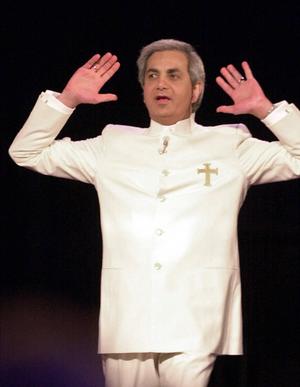
Runner-up: "Benny Hinn is recognised as a Christian healing evangelist and Bible teacher."

I hope that was said with tongue firmly in cheek.

The winner: "Benny Hinn Ministries is not a member of the Evangelical Council for Financial Accountability."

Yep, I'm as surprised as you are to read that...

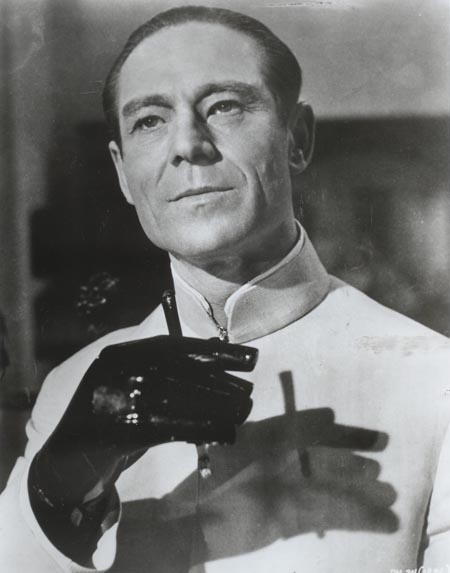
By the way, is it just me or does Benny Hinn's outfit remind you of Dr No's in the first Bond film? They must have the same tailor.

Monday, September 8, 2008

Did God Really Say...?


Just in case your finger isn't on the pulse of pop music today, there is some 'big news' floating around which I was unaware of until yesterday. Now normally I like to keep myself abreast of all the goings on in the current stars' lives, but somehow this piece of information escaped me. The current big star in question, the pop star all the kids are talking about is of course one Sir Cliff Richard (as if I needed to tell you).

Sir Cliff, like pretty much every other person who considers themselves even remotely famous (I'm looking at you Jaap Stam), has written an autobiography. And if that simple fact isn't 'big news' enough for you, well there's more. It's what is contained within the pages that is the real news. Cliff (and forgive me if I'm about to shock any life-long fans of his), has, um, well, a male "companion". In teenage girl speak, he is now bff's with a former priest by the name of John McElynn. I'm not implying anything about their relationship; I'm just saying. And also, in completely unrelated news, Cliff also writes in his autobiography that the Church of England needs to allow gay marriages.

Like me, you may be a bit cynical about this. He has admitted to having a male companion (do people still use that word?) and also admitted to wanting a change in the Church's stance on homosexuality. The temptation here is of course to put two and two together. But since Cliff hasn't explicitly said he's gay, I'll refrain from making that seemingly glaring deduction.

What I will comment on are Cliff's in-no-way-self-serving views on homosexuality, as quoted in his autobiography. In fact, Cliff's views are possibly shared by many, so I shouldn't restrict them to being the views of only one man with an ex-priest as his companion. That would be narrow-minded of me.

Here's the extract I'll explore:

I think the Church must come round and see people as they are now. Gone are the days when we assumed loving relationships would be solely between men and women. It seems to me that commitment is the issue, and if anyone comes to me and says: 'This is my partner; we are committed to each other', then I don't care what their sexuality is. I'm not going to judge; I'll leave that to God.

Based on this extract, there is one prominent question in my mind, one question that everything hinges on, and that is, 'Does Cliff believe what the Bible has to say?' He talks about God, but does he believe God?

Cliff says that 'gone are the days when we assume loving relationships would be solely between a man and a woman'. Well, I feel I must remind or inform my reader that if you were to pick up a Bible and start from the very beginning, it would only take an hour, maybe less (depending on how quick a reader you are), to come across the days when relationships were no longer exclusively between a man and a woman. We're not told of any 'loving relationships' between men, but we do know that men were with men, so in all likelihood there were some 'loving relationships', whatever that means.

The point I'm getting at is that homosexuality isn't a modern phenomenon. It's not something that has been conjured up in the last 100 years. It's not something God just didn't see coming, and therefore He hasn't been able to make His views known on the matter. The days when men were exclusively with women are long gone. Cliff seems to think that 'sexual liberation' was something fashioned in the 60's, but if you believe the Bible (and if you don't, then you should really consider a different religion to Christianity), then you will be aware that free, hedonistic attitudes to sex have existed almost since the beginning of time.

So in one sense, Cliff is actually right. Gone are the days indeed. However, the days are long gone, and God has not remained silent on the issue. His Word has not left itself open to re-interpretation on homosexuality based on a cultural swing (which actually swung in Genesis 19). Therefore when Cliff states that "The Church needs to come round and see people as they are now", he is basically calling for an absolute truck-load of Scripture to be ignored, or to be dismissed as being culturally irrelevant. True there are many laws in the Bible that have been abolished by God based on cultural changes or the New Covenant, but we don't get to just pick and choose which ones to do away with and which ones to keep. We live under a theonomy, not an autonomy.

Based on faithful biblical interpretation, it's as clear as day that God's views on homosexuality were not cultural. I mean if you think they were, then you might as well say that lust is no longer a sin, because they didn't have widespread internet pornography back then, so Jesus didn't really take into account our culture today when he talked about this issue in the Sermon on the Mount. It's absurd to try and twist the Bible in order to justify ourselves, yet we are of course all guilty of this. From homosexuality to lying, we all try and excuse our actions by calling into question the Word of God. For this practice I certainly don't single Cliff out.

When we read about Satan's role in the Fall, the very first thing he says to Eve is 'Did God really say...?'. He didn't present sin in its true colours, he didn't tell Eve to flatly disobey God. He came to Eve and brought the Word of God into question. There is no device of the devil more devious than this, and so we are to be constantly on our guard, knowing unequivocally what God's Word teaches us.

No Church has the right or the power to change the Word of God. Or at least no Church should have the right or the power. Only Jesus Himself, the Head of the Church, can alter anything, but since He has already given us everything we need for life and godliness, there is no biblical reason for a change in the Church's stance towards homosexuality - just like there is no biblical reason to change our views on lust or lying, no matter how committed a liar you are.

Cliff goes on to say that "it seems to me that commitment is the issue'" "It seems to me"? Based on what, Cliff? Well we're not told why it seems to Cliff, but I'm guessing his autobiography doesn't go into his reasoning, so we're left in the dark. As a word of caution however, the phrase 'it seems to me' is a dangerous one when it's not backed up by anything but our own gut feelings or preferences. If you can point out instances in this blog when I say something like that but give no attempt at sound reasoning, then do please inform me, because I need to cut any of that nonsense out.

Anyway, Cliff seems to think that commitment is the issue. Not heterosexual marriage, not homosexual marriage, not even heterosexual commitment. Cliff has widened the path so much as to encourage every single person involved in a committed relationship to just keep it going, because commitment -- and nothing else -- is the issue.

This may sound very kind and loving and so forth, but it really isn't. By saying "I'm not going to judge; I'll leave that to God", we may think Cliff very noble and biblically minded. Not so.

Say a Christian friend of mine comes to me and says, "OK Declan. So I'm sleeping with my girlfriend, and I know the Bible doesn't actually approve of that, but we're committed to each other. Is this alright?". Would I be loving that person well if I just replied "Well, it's not my place to judge, so go ahead. After all, it seems to me that commmittment is the issue God is most concerned about". No, I wouldn't. In fact I'd be bringing judgement upon myself by saying such a thing (Isa. 5:20).

Loving that friend would involve setting him straight. It might not be the easiest of tasks, but it would demonstrate a heart that truly cared for him - a heart that wanted God's will for His life. I wouldn't be judging him by revealing God's Word to him, showing him the error of his ways, and strongly encouraging him to turn to Jesus in repentence and live a godly life. Judging is something entirely different. We are called to speak the truth in love (Eph. 4:15), and I would hope I have the courage to do so in such times.

Jesus said that He didn't come to judge the world, but to save it. He could have judged the world then and there and we wouldn't have had a leg to stand on, but He didn't. Instead He came to save us, which begs the question - Save us from what? Well, to cut a long story short, from the penalty of sin, which is the wrath of a holy and righteous God. If you want a passage that falsifies everything that Cliff Richard and others of a similar viewpoint say, then you need look no further than Romans chapter 1:

For the wrath of God is revealed from heaven against all ungodliness and unrighteousness of men, who by their unrighteousness suppress the truth. For what can be known about God is plain to them, because God has shown it to them. For his invisible attributes, namely, his eternal power and divine nature, have been clearly perceived, ever since the creation of the world, in the things that have been made. So they are without excuse. For although they knew God, they did not honor him as God or give thanks to him, but they became futile in their thinking, and their foolish hearts were darkened. Claiming to be wise, they became fools, and exchanged the glory of the immortal God for images resembling mortal man and birds and animals and creeping things...For this reason God gave them up to dishonorable passions. For their women exchanged natural relations for those that are contrary to nature; and the men likewise gave up natural relations with women and were consumed with passion for one another, men committing shameless acts with men and receiving in themselves the due penalty for their error.

It doesn't get much plainer than that. Of course we know that's not the end of the story. We know there is hope, despite the fact that "all have sinned and fall short of the glory of God". As I mentioned earlier, Jesus came to save the world, not to judge it. But one day the whole world will be judged by God (as Sir Cliff rightly noted), and His wrath will be poured out on all unrighteous suppression of the truth.

However, the message that Cliff seems to be heralding is for us to exchange biblical truth for a lie, which is eternally damaging for all who believe it. He can sugar coat it with nice words, but that's what is at the heart of the little extract I quoted earlier, whether he intends it or not. And of course one cannot be saved if one doesn't acknowledge the truth.

Now I'm not saying that we go around telling practicing homosexuals that they are destined for hell a la Wetboro Baptist Church (who, for the record, are just flat out wrong in all that they do and teach). Though 'homosexuals end up in hell' (whatever that means) is found in the Bible (1. Cor 6:9), it is not the message that we are called to teach. We might as well go around preaching that coveters, liars and extortioners are on their way to hell too, if that's our job description. And what's more, we might as well go around preaching that everyone is going to hell, including us, because as Paul makes clear in the first three chapters of Romans, we all stand guilty before God as transgressors of His righteous law.

We are called to make disciples - to teach people. But not to just teach people according to our preferences or ideas. We are to teach people the truth, which is Jesus Christ - the Son of God who died for our sins and was raised to life. We are also to teach people what is true - as it is revealed in God's word - in the light of Christ's redemptive work.

Cliff Richard, in calling for a change on what God views as sin, is not teaching what is true. You may not think he's teaching at all, but unfortunately he is. When he says that he thinks commitment is the issue, he's teaching us his ideas, and some will read that and think, "You know, maybe Cliff is right". Well, if I haven't made it clear enough already, Cliff isn't right. Not because he's out of sync with my preferences. Not because 'it seems to me' he's not right. But because the Bible clearly teaches something different to what Cliff is teaching.

You may wonder, "Well so what if he's teaching this wrong view of sin? Isn't teaching faith in Jesus enough?". A short answer to that is 'no'. Jesus said that you will know who men follow by their fruits. You cannot encourage someone to profess a faith in Jesus without encouraging them to live godly lives. The two go hand in hand. Our faith alone saves us, but saving faith produces works and a desire to obey God, because Jesus is now Lord of your life. As James writes, 'Faith without works is dead'. By teaching wrong views on sin, you are not producing disciples of Jesus, but disciples of some other person who is like Jesus, but not the real thing.

As with Eve in the garden of Eden, the Word of God is being questioned when ideas like those of Sir Cliff Richard are put forth. Cliff might as well be asking, "Did God really say that homosexuality* is a sin?". It's a cunning question, and we must be careful to know just what exactly God does have to say on the matter, as unpalatable as it might be for some people.


* When I say 'homosexuality', I'm talking about someone who has given their life over to the practice. There are Christians who no doubt struggle with homosexual desires, but look to God to overcome them, just as there are Christians who battle with heterosexual lust (i.e. every single male Christian). And of those who have adopted the homosexual lifestyle, it's of course the Christian's job to love these people as our neighbours. This piece isn't supposed to act as a speech every Christian must say to gay people. After all, you can have all the correct doctrine in place, but if you have not love in your heart then it will profit you nothing

Tuesday, August 26, 2008

Become A Moussier You


I got a forward a couple of weeks ago asking me to sign a petition to prevent, among others, Joel Osteen from being taken off some radio channel or something. My first thought was of course, 'Prevent!?' I was severely tempted to write back to everyone on the mailing list and let my thoughts on Joel Osteen be known, but I didn't think that would be right.

So instead, I'm going to take a little interview with Joel in which he discusses the finer points of his *gulp* bestseller 'Becoming a Better You', and examine it thoroughly. Here's the link for the video:

Joel Osteen - Become a Greasier You

The interview is done by Borders, a massive bookstore chain in America, with apprantly very low standards. The name of the actual person conducting the interview is not revealed, so I'm going to call him Kyle. He looks like a Kyle.

Anyway, Kyle opens the interview up by saying 'We're here today with Pastor Joel Osteen...'. The madness begins, and we're only 2 seconds into the interview. Joel Osteen may be a lot of things, none of which I shall utter here, but a pastor is not one of them, simply because his gatherings in that ridiculously large arena no more constitute a church than a taping of Dr Phil does. I mean who makes these guys pastors? I say what the Evangelical Church needs to do is appoint one man to be the head of the Church, declare him to be infallible, and leave all the big decisions to him. And that man should be Charles Price. What could possibly go wrong? It's not like this kind of church hierarchy has caused problems or divisions in the past...[?].

We're told the title of Osteen's book is 'Becoming a Better You: 7 Keys to Improving Your Life Everyday'. Does he think that having it be 7 keys makes it more Christian? Probably. I could stop right here and go on for lengths about the folly of such a title, but all in good time my friends.

Osteen's first words are "Oh I took playsher in appreciatin' whut you guys are doin' for us, an I'm jus enjoyin' the tam", having been thanked for appearing in this in-no-way-contrived interview. What Joel means by this is anyone's guess, but he says it with shiny white teeth on display and a southern accent in full swing, so it must be something friendly, warm, and heartfelt.

Kyle says that Osteen's first book (I know I know - He's written two books? But then so has Jordan! I mean even Jaap Stam has a book out there people!), 'Your Best Life Now', was 'um, a phenomenal bestseller'. I like the way he paused as if he was about to say it was a great book, but then realised that he just couldn't say that with a straight face, so he decided to stick with the facts. The facts in this case being that 'Your Best Life Now' has sold over 4 million copies, which means roughly half the people in Osteen's church now own it.

Kyle then asks a valid question - one that is probably on your mind right now. If Osteen has already released a book entitled 'Your Best Life Now', then what the heck does he need to release a second book for? Hasn't he already given his gullible audience the solution to their 'best life' dilemma? Kyle doesn't quite phrase it like this, but that's the gist of it.

Osteen's answer is simple - "I wanned the money". Oh wait. Sorry. I'm quoting what Osteen was thinking. My bad. (I'm a horrible cynic I know, but I'm confident God will sanctify me one of these days.)

What he says is...deep breath..."Well...it...it...basically...I wanned ta...I filt lak payple needed ta keep growin'; we all should keep growin', and thet's whut the book is abowet...'

He says that 'Your Best Life Now' was 'a lot about enlargin' your veeeeshun, and thangs like thet, but this book is abowet whut can we do evry dye to become better...'

So in other words, his first book really didn't help anyone to live their 'best life now', and was thus a complete waste of money (and to think I was so close to buying it). However, Joel has corrected that slight error in the first book by releasing this new book that does actually tell us how to live our best life now. Do we have any reason to believe him? Is Joel Osteen's hair natural? The answer to both those questions, is no.

Joel actually addresses the contradiction in book titles by jokingly asking 'Once you've leeuved your best laf, whut can you do?' Well he answers his own question by saying 'In the book (that's the new book) we talk abowet how you do thet - through better habits, better relytionsheeups, better thinking'. Oh good, because I thought he was gonna be vague about this.

What he more or less openly says is that his first book doesn't tell you how to live your best life, which kind of makes it a bit useless if you ask me. I guess he just figures that any idiot who would possibly buy his first book has done so already, so there's no financial harm in rubbishing it and telling people they need to go out and buy the second installment. In fact there's only financial gain to be had by making such a claim, but I'm sure Joel wasn't thinking of that at the time [?].

Kyle then loses my support, as he compliments some aspects of this book (which obviously means he read it - a major no no, Kyle), specifically the stories Joel tells and the way he can communicate on the level of the common man, by including self-deprecating anecdotes which reveal that Joel himself is still learning. Oh that's Joel Osteen alright - the man with the common touch.

"I think that's part of whut Gods blessed us weeuth, is that I don't know it all -- I said it out there todye..." This is where Joel and I agree. God has indeed blessed us all by not making Joel Osteen the source of all knowledge; the one whom we should emulate. Could you imagine if He had? It would certainly be a lucrative time to be a purveyor of hair mousse and fake tan, that's for sure.

Joel then begins to...um...well...the line 'Red, I do believe you're talking out of your ass' comes to mind. After taking a few nice words like 'practical', 'growing' and 'relate' and meshing them together to form a largely incoherent sentence, we finally get to the meat and veg of this book. The part that explains the solid foundations on which this book is built. The part where Joel gives us an incite into what lies beneath.

"It's not some fancy doctrine or sumthin'; thase are thangs we cen do evry dye."

In other words, what Joel is telling us is that this isn't a book based on Biblical doctrine and sound teaching from the Word of God. Those 'fancy doctrines' don't really have any practical application to our daily lives didn't you know. However what Joel doesn't appear to realise is that he himself is presenting doctrine in this book. He's giving his readers a set ot teachings to adhere to if they want to become better Jesus' people. It may not be 'fancy' doctrine or truthful doctrine, but it's doctrine nonetheless. And what's more, it's the kind of doctrine that 4 million people will pay money to read about, sadly. (Only in America, eh?)

Joel adds that some people give him some grief over the simplicity of his unfancy doctrine. They say 'Well I already knew that'. Oh dear. If the kind of people who read these books already know what you're teaching, then calling it 'simple' is a massive understatement. The words 'obvious', 'common sense', and 'duh' come to mind. In my head, 'Becoming a Better You' contains things like this:

"Key #3 - Relationships. If you want better relytionsheeups, then you should tra talkin' to people more. Whin I don't talk to people as much as I should, I don't have good relytionsheeups. But when I talk more, I have better relytionsheeups, and I become a better may.

Key #4 - Habits. If you want better habits, then you nade to stop practicin' your bad habits, and start practicin' some good ones. I used to park ma SUV on the far sad of the road, but now I park it on the near sad, makin' thangs easier for may and ma waf, and makin' may a better person as a result."

(Notice the way this is both practical, self-depracating, Bible-free, and when you read it you go 'Duh', thus ticking all 4 boxes.)

There's so much more I could comment on from this 7 minute clip, but since the fact that it is complete nonsense is so obvious, I think I'd be wasting my time, and your time too. Plus, it's just too painful to have to listen to Joel talk, not to mention write it all down, so I'm going to spare my own sanity.

Joel Osteen personifies the word 'magoo'. There's no better word to describe him or his kind. I don't even know if I'd call him a heretic, because he's so far removed from the gospel that it would almost be like calling Dr Phil or Tony Robinson heretics. Then again, Joel does operate under the guise of a pastor, and he brings God into the equation whenever he feels the need (which really isn't that often, thankfully), so there has to be at least something heretical about him.

Then again, maybe there's a place for Joel in the Church Of Jesus Christ. Real pastors can take care of all that 'fancy doctrine', and Osteen can take care of the practical applications. Think of a tag-team consisting of R.C. Sproul and Joel Osteen:

Sproul - "The Holy Spirit indwells the believer, working to bring about a more righteous life and heart. We must be careful, however, not to confuse the indwelling Spirit with any deification of the individual. The Spirit is in the believer and works with the believer, but does not become the believer."

Osteen - "Thenk you R.C.. Whut thet manes in practical tuuurms is that way nade to become better payple by having better habits, better relytionsheeups, and better thinking. For example, this one tam, ma waf and I..."

If I know R.C. Sproul like I think I do, he'd definitely be up for that.

Monday, July 28, 2008

Bent Toddley


There have been countless writings about the Lakeland revival since God (read: Todd Bentley) started working there a few months ago. So many in fact that I wasn't going to bother adding to the mix. But then what fun would that be?

However, I'm not going to go into all the theological aspects of it. For one, there's hardly any theology to the whole thing in the first place, so trying to discuss it would be like trying to talk about football based on a basketball game (that analogy doesn't make any sense, does it? Meh, I tried). And what's more, I'm no theology expert to begin with, so for that kind of reasoning it's best that you go to a more reliable source than this humble blog of mine.

What I do want to do is take a youtube clip I've just watched and give my two cents.

Just so you know, I didn't type 'Wacky Todd Bentley rubbish heresy fake' into the youtube search engine in order to find the most contraversial clip out there (although remind me to do that later). I simply searched 'Todd Bentley' and this clip was one of the results. And what's more, this clip appears to have been posted by someone who has some sort of respect for the work that is going on in Lakeland (I'm saying this because of the title and the description). All in all, I think this is a fairly neutral clip to examine, and from all the bits I've seen on God TV etc it's a reasonably accurate depiction of what's happening in Florida (why is it always Florida?).

Unfortunately, the worship leader who looks like John Travolta isn't in it, but you can't have everything I guess. Although you can put a picture of him up on your blog for poops and giggles.


Ahhh, that's better. Anyway, here's a link for the clip:

Wacky Todd Bentley Rubbish Fake Heresy

And so it begins. "How do you know you're healed?" Bentley asks the woman on stage. "I'm not sure 100%, but..." is the response. I bet he gets that answer a lot, does Todd. However, Bentley recovers quickly from this little setback and swiftly drops the woman to the floor, thus rendering her incapable of saying anything further that might expose this 'miracle' as a hoax. Thinking on your feet, Todd. I like that. Thankfully, he didn't get her to the floor by kneeing her in the stomach as he's been 'called' to do on special occassions, so phew for that.

(If you've watched the clip, isn't that noise the woman makes as she falls to the floor so funny!? Just watch it again. I've watched it like 7 times and it still cracks me up.)

We're then informed that someone is been healed of broken eye disease. Well, not quite. Bentley 'almost' wants to call it a broken eye, which it isn't at all. What he's actually describing is the socket behind the eye being fixed and what have you. And even more specific, it's the socket around the 'right eye'. I bet there was one guy in the crowd that had the exact same problem around his left eye who was just like 'Ah crap!', and stormed out in a huff.

Bentley wants this person to step forth, and then goes on to say that he 'just had one of those visions'. The kind of vision he's describing is where he sees one particular person get healed. However, two people actually come up on stage, I'm assuming to claim that their eye is no longer broken, or something.

I wonder how Todd explains the inaccuracy of this vision, since, you know, his vision was for one specific person? Maybe it was a special-offer vision, like 'have a vision of one person healed, and get another person healed absolutely free'.

Or maybe, just maybe, one of these people is faking it. I say a Solomon-like test is in order here. What Todd Bentley should do is knee them both in their left eye, and whichever one can still see out of their right eye is the true miracle receiver. Makes sense, doesn't it? Hopefully Todd will then get 'one of those visions' where he sees people with left eye problems being healed, and things will be as you were before the test was carried out, with no harm done.

No such test is carried out of course, so what we have is two people claiming to be healed, one of whom has a patch over her left eye [?]. More on that later.

But first, Todd interviews possibly the dumbest man alive. Think guest on the Jerry Springer Show and you're in the right ballpark. Todd asks him who he is, and he doesn't actually appear to know. Maybe I'm wrong, but a damaged eye appears to be the least of this man's concerns.

Todd asks him if he 'broke his eye'. Too funny, but it gets even better. Todd continues by asking him if he's blind or if there's nerve damage, or if there's anything wrong with his eye at all. First off, blind? Blind!? Didn't Todd already say that this is not a case of a broken eye, and that his vision was for that of socket repair? Yes, he did. I'm no medical practitioner, but I'm fairly confident that blindness is as a result of damaged eyes, therefore that's not the issue at hand. Maybe that's why Todd calls these visions 'open visions'. As in they're open to whatever interpretation fits the situation at hand.

Of course maybe Todd asks all his guests...er, I mean receivers of miracles, if they're blind, regardless of the vision he received. It could be an oral disclaimer of some form, so that if God calls Todd to kick someone in the face, then at least he's made himself aware of that persons current eye-sight status, lest he be duped by an already-blind person and sued for millions. Blind people, eh? You just can't trust them. There's a lesson here kids - it's always good to cross your t's and dot your, um, lower case j's (Oh Wayne's World II, how I love you).

Anyway, this mans socket got damaged when 'a car hit [him] on a bicycle'. I bet it was a parked car, wasn't it? We don't actually get to see his right eye, which makes me a little suspicious. Also, the lady with the patch on her (left) eye is smiling the whole time, which leads me to believe that his face isn't horribly disfigured or anything. Either that, or she's incredibly insensitive. Or maybe she actually is blind, in which case watch out Todd. This one could be up to something, so make sure you ask her the question.

Todd then says that a creative miracle is about to happen, and 'Boom!', Bentley sends him to the floor. Didn't Todd say that the miracle has already happened during that vision speech of his? Shouldn't this guy already be healed? Wasn't he called up to the stage to proclaim the miracle that Todd had just witnessed in one of these 'open visions' of his? Maybe it's like a visualisation type thing, where Todd first sees the miracle, and then a few minutes later it happens. Hey, I'm just brainstorming here.

Of course a cynic might say that Todd just makes these visions up in his head, some idiot from the crowd responds/is dragged to the stage by Todd's henchmen, and then a whole bunch of hokey-pokey madness ensues. I mean these cynics probably want 'medical proof' of the miracles too. Why can't they just have faith and believe that everything being done is authentic? Why this need to 'test the spirits'? I mean where did they even get that idea? Not from any source Todd Bentley knows about, that's for sure.

The woman with the patch over her (left) eye is next in the firing line, as Todd Bentley points out to her 'You've still got the patch on'. It's keen insights like this that give merit to all that Todd Bentley is doing.

The woman goes on to say that 'I had a brain tumor, it was right behind my eye...' but before she can actually flesh out her story and more than likely contradict Todd's open vision, he interrupts, saying 'The Lord is gonna do a miracle right now' and gentley guides her to the floor (not pushes...gentley guides [?]), which apparently is the only way in which a miracle can take place.

"My job is to see, my job is to pray, and then God does the rest." And how much do you get paid for this job, Todd? Just curious. OK I'm being too cynical. Open mind, Dec. Open mind.

"Sometimes the miracles are instant, but like that woman who came out of the wheelchair, sometimes it takes two/three days." That sounds suspiciously like another oral disclaimer, with Todd basically saying that if you're not healed at this meeting then be patient and give it a couple of days, by which time you'll hopefully be far away from Lakeland and unable to complain to anyone about not receiving any healing.

A woman who was prayed for earlier then begins to leave the stage, but is stopped in her tracks by Todd, who kindly says 'Come here, you with the growth' (as she's affectionately called by friends and loved ones). I really hope this isn't how Todd addresses all his flock - by their respective sicknesses. "Hey you with the brain tumor, get over here." "Where do you think you're going, you with the mangled legs?" "See ya later, syphilis." Insensitive much?

Anyway, Todd asks this lady if she can feel anything. He asks this while tickling her throat, so I'm guessing she can, Todd. He stops tickling her and asks "can you feel any sensation?" We get a pause for about 7 seconds and the woman lets out a quiet "Ummm...no." Brilliant!

Todd then uses the Benny Hinn-approved method of putting words in peoples mouth by 'asking' "Did you feel a burning on the floor, or what were you doing on the floor?" The woman says that she did feel burning [Glory Hallelujah!], but only in her arms and hands (presumably the growth is on her throat).

Todd then ushers her to the floor for a second helping, saying 'That growth will be gone. Check it in the mirror." Aha. So Todd does encourage the verification of his miracles. And not only that, he's also urging people to use the most rigorous, fool-proof device of them all - a mirror. Basically, if you don't see it, then you're healed.

- "But Todd, how do you know I was healed?"

(Todd holds up a mirror to the persons face)

- "Well, can you see your lung cancer?"

- "Um, no, but.."

- "But what!? You've been healed!"

OK so I'm blowing things way out of proportion here. I just thought the 'check it in the mirror' line was hilarious.

Next we have a man whom Todd 'called out by word of knowledge the other day', or so says David Tate, one of Todd's henchmen. Tate says that this man has been healed of shoulder problems, and also Todd's word of knowledge about financial blessing has come to pass, because 'God is prospering him'. How do we know that his latest paycheck hasn't just gone through? What is this prosperity that you speak of, Mr Tate?

Todd wonders how he managed to call this guy out, and the guy just says that Todd mentioned his blue shirt (which he's wearing again today [?]). He describes Todd's vision for him, where an angel came and touched his shoulders, and then a ball of fire came out of heaven and gave him some sort of burning sensation. (I would have payed serious money for John Travolta look-a-like to start singing 'Goodness gracious, great balls of fire!" right then. Serious money.)

Anyway, ridiculous story short, this man's shoulders appear to be functioning normally, although all we have to go on is the fact that he can move them around for about 5 seconds. Who's to say he couldn't have done that a couple of days ago? I say get the mirror out. It's the only sure way to know what's what.

Busted shoulder guy continues talking about his problems, but Todd just starts shaking his head and says that he can still feel that fireball. This whole thing is just hilarious to watch, because it's perfectly obvious that Bentley isn't listening to a word that this man is saying, but busted shoulder guy has no idea and just stays talking.

Todd then rushes over to him, places his hands on the guys stomach and goes 'Bam!'. Finally the guy stops talking, but he was too busy talking to realise that this is the moment in which he's supposed to fall on the ground. Todd is a persistent man though, so he's not giving up just yet.

He goes in for a second bam now that the guy is aware of what's going on, but this doesn't get him to the floor either. Um, what's going on here Todd? Why isn't this working?

Not to worry. Todd starts on this big rant about, you guessed it, fireballs, angels, visions etc etc. Not Jesus though, because on the spiritual food chain, apparently fireballs trump Jesus. Who knew?

The rant finishes with the sentence "God's gonna mess up your theological box." God, Todd - who knows? The point is, your theology is going to be totally screwed up, and it may take years to recover from it. Eventually the man falls to the floor, presumably dazed from all the crap he just heard. Todd's work here is done. Neeeext.

"Somebody broke the bones on the top of their right foot..."

I bet there's this guy who had that exact same problem with his left foot who just...

And that's how this little clip ends. We don't get to see what happens next, but I'm presuming about 3 people came up on stage, one of whom had a big cast on their left leg. They all end up on the floor, and they each receive one of those miracles that takes two or three days to kick in.

In closing, I know I've been really, REALLY harsh with this piece. I just have so little time for things like this. I believe in miracles, absolutely. But they're signs, as well as being initial manifestations of God's kingdom. They're not the be all and end all. Here's a verse from John's gospel just to confirm as much:

Now Jesus did many other signs in the presence of the disciples, which are not written in this book; but these are written so that you may believe that Jesus is the Christ, the Son of God, and that by believing you may have life in his name.

A sign always points to something. I mean that's the very definition of a sign. It appears to me that Todd Bentley's ministry is all about miracles (the validity of which I feel I'm right to question), and very little of it has to do with people coming to a saving faith in Christ Jesus, and having life in His name.

A lot of people are sitting on the fence with regards this movement. However, I'm never really one for fence sitting, so I'm more than happy to say that I don't think it's a good thing whatsoever. I'm willing for God to open my eyes if I'm wrong, but right now I firmly believe that this is doing so much more damage than good for the kingdom of God.

Can any good come out of it? Yes, of course. I'm sure there's a very tiny amount of good coming out of Benny Hinn's wild crusades too, but that doesn't make them right.

There is a passage in Philippians where Paul talks about people preaching from wrong motives etc, but that he still rejoices because Christ is being preached regardless.

However, I would assume this to mean that there were no strong doctrinal errors being taught. The same cannot be said for ministries such as Bentley's and others of similar ilk. I may be wrong, but I can imagine Paul having a very Galatian-esque letter lined up for Todd Bentley and co.

Are these guys preaching Christ in all His fullness? It doesn't look like it, and I see that as great cause for concern. To anyone reading this who isn't a Christian, Todd Bentley is not what Christianity is all about. Check the post below this one for some proper teaching, and avoid Todd Bentley.